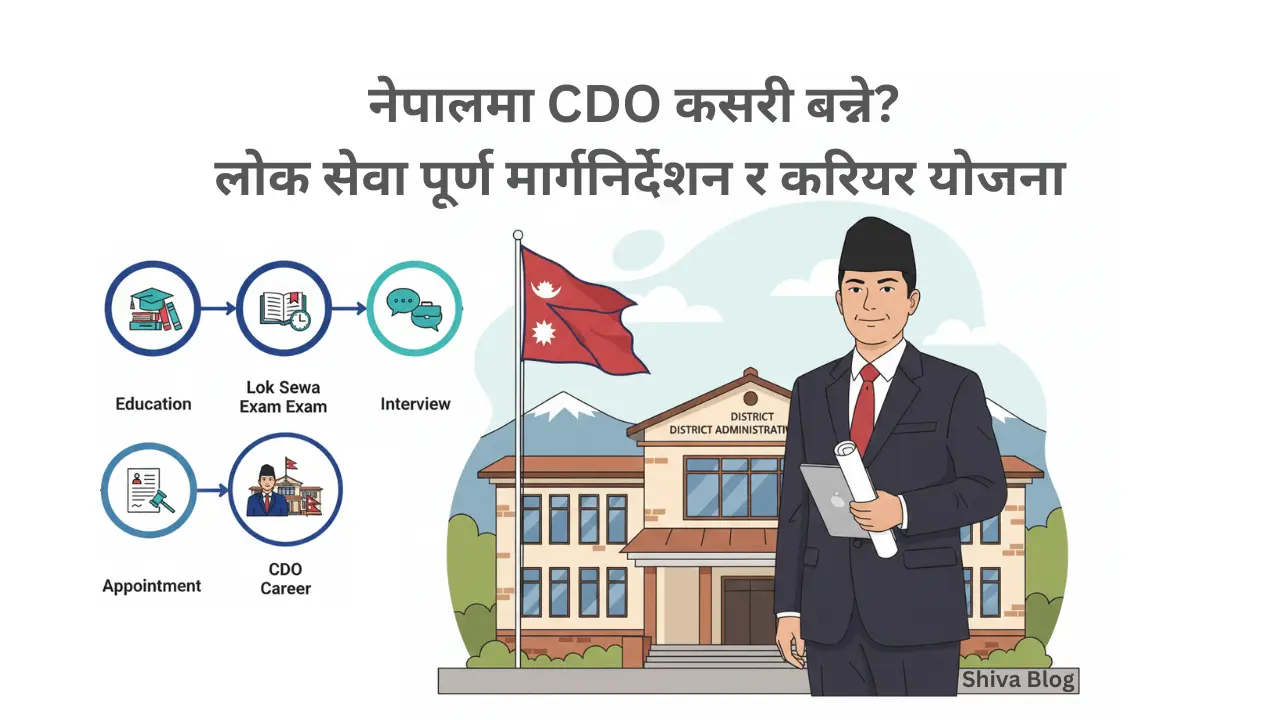
Complete Guide to Becoming a CDO in Nepal: Qualifications, Exams, and Career Path
In Nepal’s administrative service, the post of Chief District Officer (CDO) is a symbol of high responsibility, respect, and leadership. If you dream of reaching this significant position through the Lok Sewa (Public Service Commission), this article is for you. Here, we provide step-by-step information regarding the entire process, qualifications, preparation, and career path to becoming a CDO.
What is a CDO? Role and Importance
The Chief District Officer (CDO) acts as the chief executive and the highest-ranking government administrator at the district level. Appointed by the Government of Nepal, the CDO serves as the primary link between the central government and the district, responsible for maintaining law and order, coordinating between various government agencies, implementing central policies, and managing crisis situations like natural disasters or civil unrest.
It is a role that demands sharp administrative acumen, decisive leadership, and a deep commitment to public service.
Required Qualifications to Become a CDO
The path begins with meeting the fundamental criteria set by the Public Service Commission (Lok Sewa Ayog):
- Educational Qualification: A minimum of a Bachelor’s degree from a recognized university is mandatory. While any discipline is typically accepted, degrees in Public Administration, Political Science, Law, Economics, or Management can provide a strong foundational advantage.
- Age Limit: Candidates must fall within the age bracket specified by the Public Service Commission for the particular examination cycle. Generally, the lower limit is 21 years, and the upper limit is 35 years, with age relaxations applicable for candidates from reserved categories as per government rules.
- Nationality: You must be a citizen of Nepal.
- Physical and Mental Fitness: Candidates must meet the prescribed health and fitness standards required for government service.
The Step-by-Step Examination Process
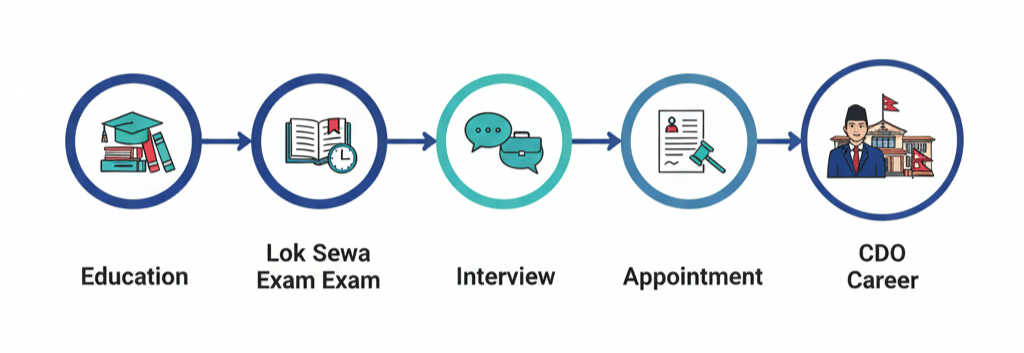
Becoming a CDO is a highly competitive process managed entirely by the Public Service Commission. The selection involves multiple rigorous stages:
1. The Preliminary Examination
- Purpose: This is a screening test to shortlist candidates for the main written examination.
- Format: It consists of a single paper with multiple-choice questions (MCQs).
- Syllabus: General Knowledge, Aptitude Test, Nepal’s Constitution, Current Affairs, and English language skills.
2. The Main Written Examination
- Format: This stage involves several descriptive, essay-type papers.
- Syllabus: Subjects are in-depth and may include Administrative Law, Public Finance & Accounting, Nepal’s Socio-Economic Structure, Policy Analysis & Governance, and Essay Writing.
- This is the most demanding and knowledge-intensive phase of the selection process.
3. The Interview
- Candidates who successfully pass the main written exam are called for a personal interview.
- This stage assesses personality, communication skills, leadership potential, analytical ability, problem-solving approach, and overall suitability for a high-pressure administrative role like the CDO.
4. Final Selection and Appointment
- A final merit list is prepared based on the combined marks from the written exam and the interview.
- Top-ranking candidates on this list undergo mandatory training before being formally appointed to the civil service.
The Career Path and Promotion to CDO
You do not directly become a CDO upon passing the Lok Sewa exam. It is the pinnacle of a long and progressive career ladder within the government’s administrative service:
- First Post Section Officer (Sakha Adhikrit): The entry-level position. You usually serve 5–7 years in various ministries or departments.
- Mid-Career: Based on performance, experience, and seniority, they are promoted to Under Secretary.
- Path to CDO: Further promotions lead to the role of Deputy District Officer, and finally, after gaining substantial field and administrative experience, to the position of Chief District Officer (CDO).
- Beyond CDO: Exceptional officers can rise further to Joint Secretary, Secretary, and other top bureaucratic positions in the central government.
- Note: Promotion depends on work experience, years of service, and performance evaluations.
Preparation Strategy and Key Tips
- Master the Syllabus: Obtain and thoroughly study the official syllabus and previous years’ question papers from the Public Service Commission. Understanding the pattern and depth is crucial.
- Stay Updated on Current Affairs: Dedicate time daily to reading national newspapers, following reliable news portals, and reviewing government publications. A strong grasp of national and international events is non-negotiable.
- Practice Descriptive Writing: The main exam tests your ability to articulate complex ideas clearly. Regularly practice writing essays, case study analyses, and long-form answers.
- Build a Strong Foundation: Have a solid understanding of Nepal’s history, geography, political system, economy, and culture.
- Prepare for the Interview: Work on your communication skills, body language, and critical thinking. Be prepared to justify your viewpoints and discuss ethical dilemmas in governance. Mock interviews are highly recommended.
Salary and Benefits
The salary of a CDO depends on their rank (Under Secretary or Joint Secretary). (2082/83) Based on current government pay scales and allowances:
| Description | Under Secretary (Class II) | Joint Secretary (Class I) |
| Basic Salary | approx. NPR 52,279 | approx. NPR 60,950 |
| Allowances (Grade/Daily) | NPR 10,000 – 15,000 | NPR 12,000 – 18,000 |
| Dearness Allowance | NPR 5,000 | NPR 5,000 |
| Total Monthly Gross | NPR 67,000 – 75,000+ | NPR 78,000 – 85,000+ |
Responsibilities and Challenges
The CDO acts as the representative of the Federal Government in the district. Their primary duties include maintaining law and order, monitoring development programs, and executing government directives. Managing emergency situations (such as floods, pandemics, or protests) is also a major responsibility. While the role comes with great challenges, it offers a unique opportunity to serve society and contribute positively to the nation’s administration.
Conclusion
The journey to becoming a CDO in Nepal requires commitment, persistence, and hard work. However, with the right guidance, strategic preparation, and an unwavering will, this goal is achievable. View the Lok Sewa preparation as a long-term journey. Regular study, staying informed, and consistent writing practice will play a vital role in your success. Turn your dream into a goal and move forward steadily. Best of luck!