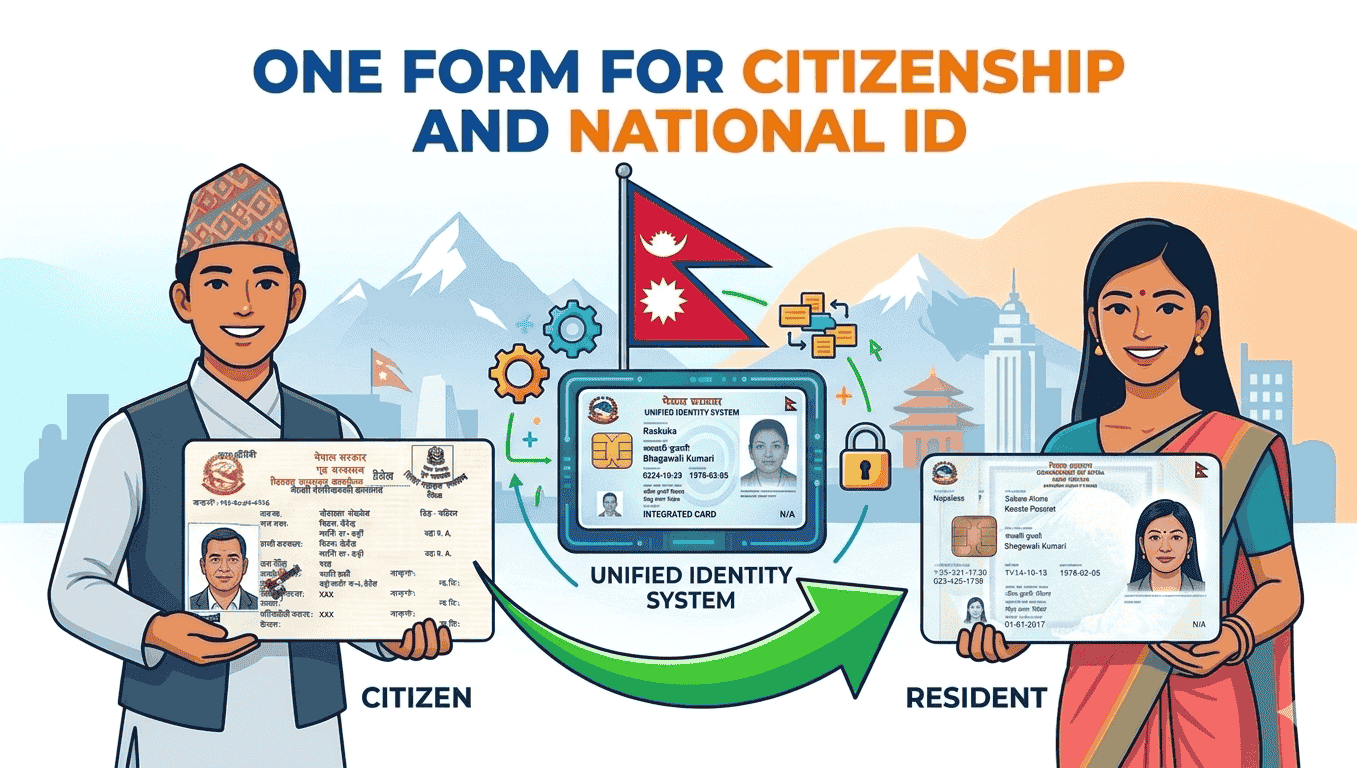
National ID Card Process Simplified: No More Pre-Enrollment Forms Required
Citizens in Nepal will no longer need to fill out a separate pre-enrollment application form to obtain a National Identity Card. This change comes after the government integrated the citizenship database with the National ID system, eliminating the need for duplicate form submissions.
Speaking during an inspection at the District Administration Office in Lalitpur, Home Minister Om Prakash Aryal shared details about the new development.
According to Minister Aryal, the Ministry of Home Affairs has successfully enabled data exchange between the Central Citizenship Management Information System (CCIMS) and the National ID Management Information System (NIDMIS). With this integration, citizens will save both time and money previously spent on filling out separate forms.
It is estimated that around 6,000 to 8,000 service seekers daily will directly benefit from this new system.
Toward Integrated and Efficient Public Services
Minister Aryal stated that this step aims to end the long-standing issue of having to fill out different forms for similar personal information across multiple government agencies. The government is moving toward a more unified and efficient service delivery system in line with modern information technology practices.
Previously, citizens had to physically visit designated centers not only to submit application forms but also to provide biometric data. The new system simplifies this process significantly.
Launching the upgraded system, Minister Aryal described it as a major milestone in promoting good governance. He emphasized that the integration will particularly benefit individuals who face difficulties filling out forms on their own, reducing unnecessary expenses, delays, and hassle.
National ID Linked with 12 Public Services
The Ministry of Home Affairs also revealed that the National ID system has already been integrated with 12 different public services. This has helped reduce duplication of data, improve efficiency, and lower government expenses.
Additionally, the ministry claims that the system has contributed to better control of economic and social crimes.
What’s Next?
Going forward, the National ID number will serve as the primary basis for identity verification and authentication. The government plans to use securely stored personal and biometric data—protected under constitutional and legal provisions—to make public services more accessible, faster, and technology-friendly.